





Phillips Report on Building
The Working Party Report to the Minister of Works: The Phillips Report on Building, was published by HMSO in 1950.
It was the first post war report on construction and set out to assess:
- The organisation and efficiency of building operations, including those specialist and subcontracting trades.
- The position of the professions.
- The arrangements for financing operations.
- The types of contract in general use.
It was written within the context of lower productivity, higher material costs, optimistic reconstruction programmes, an acceleration of electrification, full employment and high wages. During the war, the construction industry lost 230,000 operatives.
Phillips suggest that more certainty should be achievable within the construction industry. He called for greater advance knowledge, better management and more complete preplanning with full working drawings and bills of quantities and the abolition of variations clauses.
He proposed that there should be more collaboration, co-ordination and flexibility across the industry, and suggested pay incentive schemes for workers to tackle the fall in productivity. He suggested some of the problems in the industry could be tackled by a standard contract for public procurement and called for an end to the proliferation of nominated subcontractors.
It was followed in 1962 by The Ministry of Works' 'Survey of Problems before the Construction Industries', commonly known as the Emmerson Report, which again found a lack of cohesion between the parties to construction contracts and proposed the standardisation of contracts and subcontracts.
[edit] Related articles on Designing Buildings Wiki
Featured articles
Check out some of the best features and news from Designing Buildings as well as key stories from around the web.
Construction Management, 8 July

NEETs crisis drives interest in trades, but apprenticeships barriers remain.
Passive fire protection webinar

MEP services penetration seals.

Where its at podcast (and video) - The role of the Architectural Technologist as an Expert Witness.
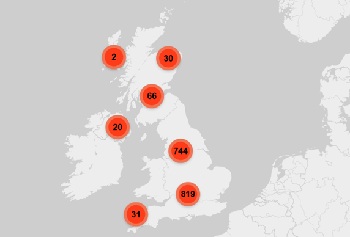
More than 200 remarkable buildings added to SAVE’s Buildings at Risk register.

Government scraps pre-application consultation for Nationally Significant Infrastructure Projects.
Historic England and infrastructure
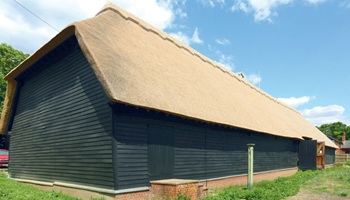
New projects offer opportunities for the historic environment and local communities.
Construction Management, 2 July

Construction deaths halve in two years.
Green Book changes to drive investment in all parts of UK.
Minimum energy efficiency standards (MEES)

CIAT briefing on response to consultations for privately rented non-domestic properties.
Connect, collaborate, shape the future

Registration now live for UK Construction Week Birmingham.

CIOB announces Saul Humphrey FCIOB as new President for 26/27 term.

A quick, simple, and zero-bills solution to prevent overheating.